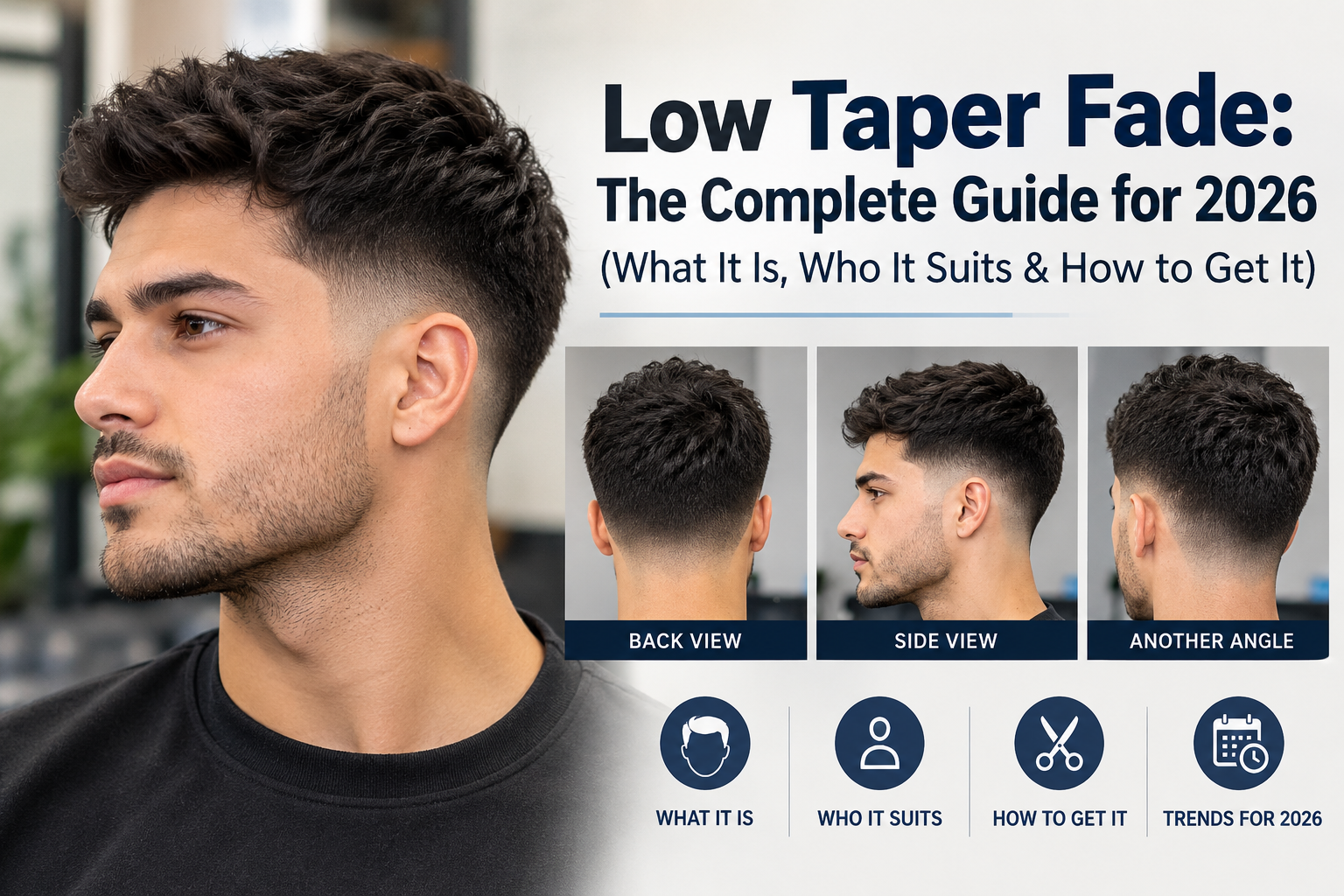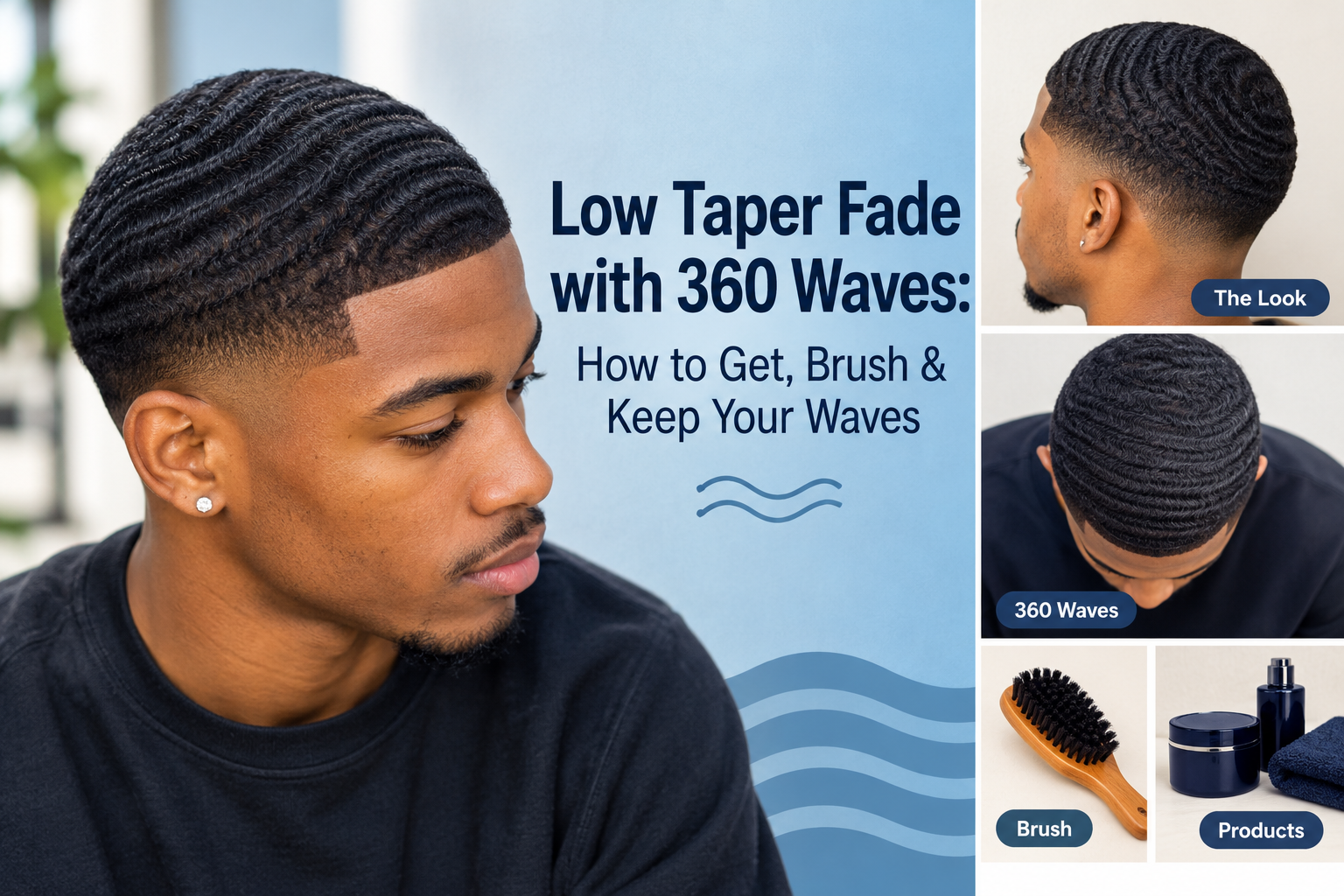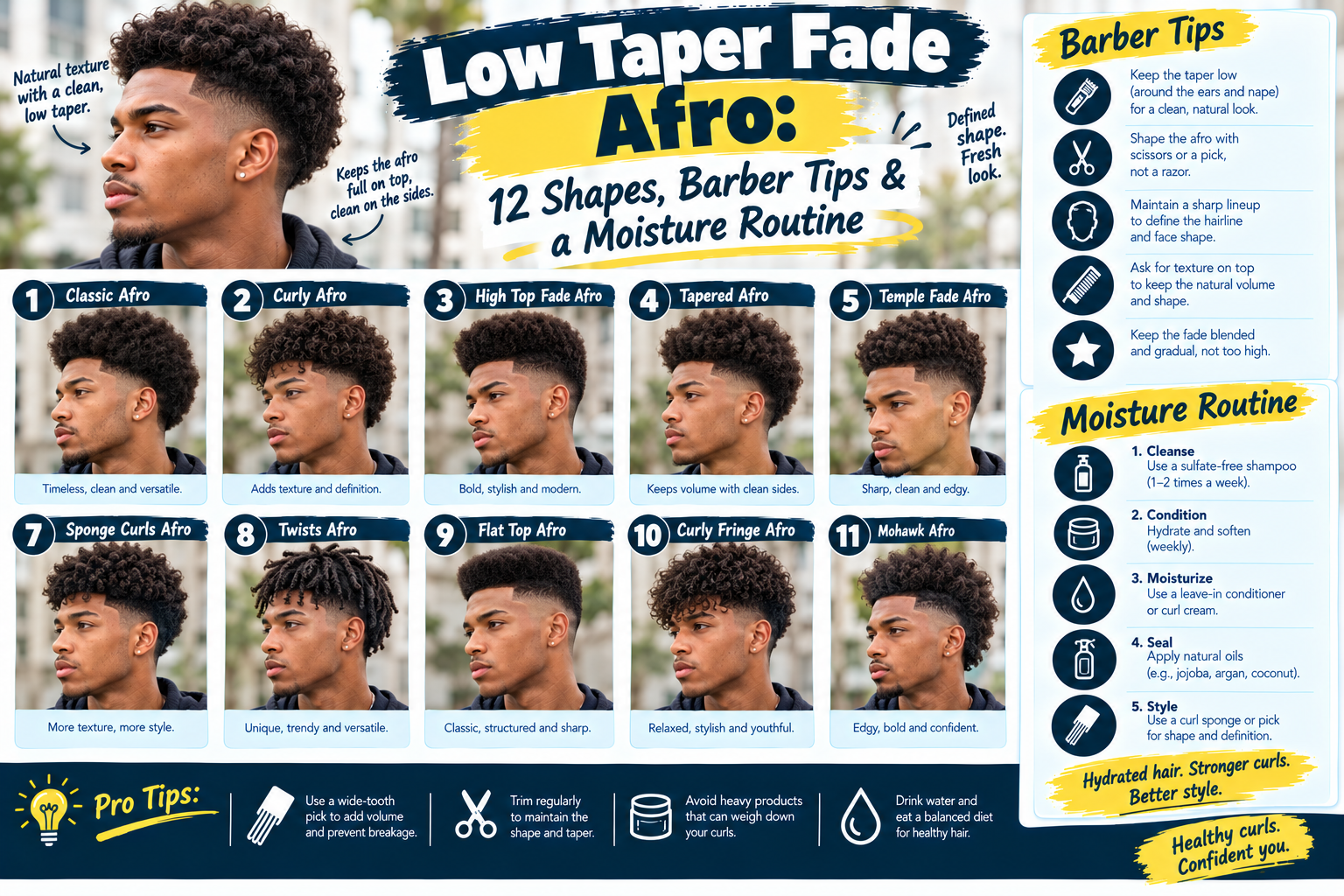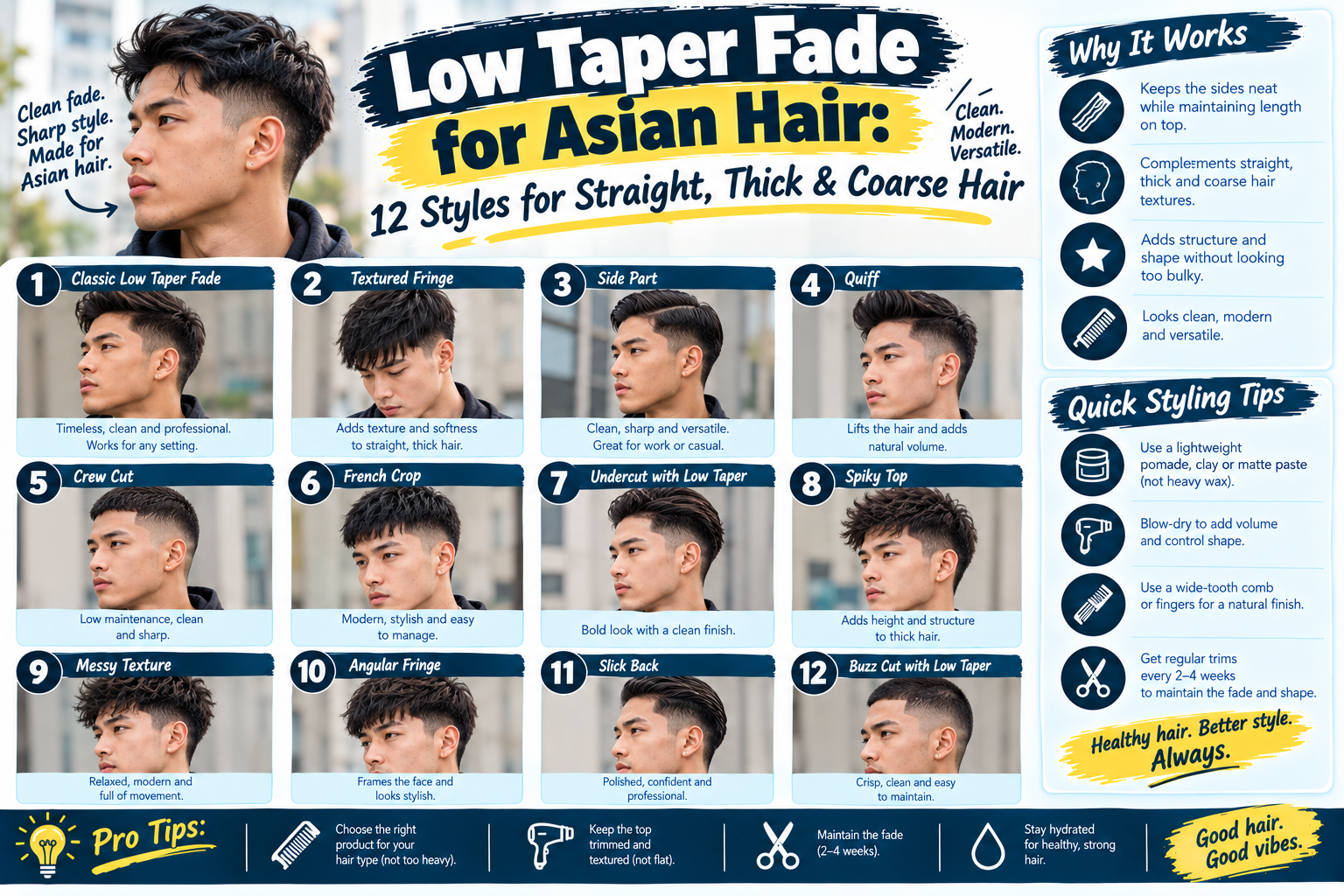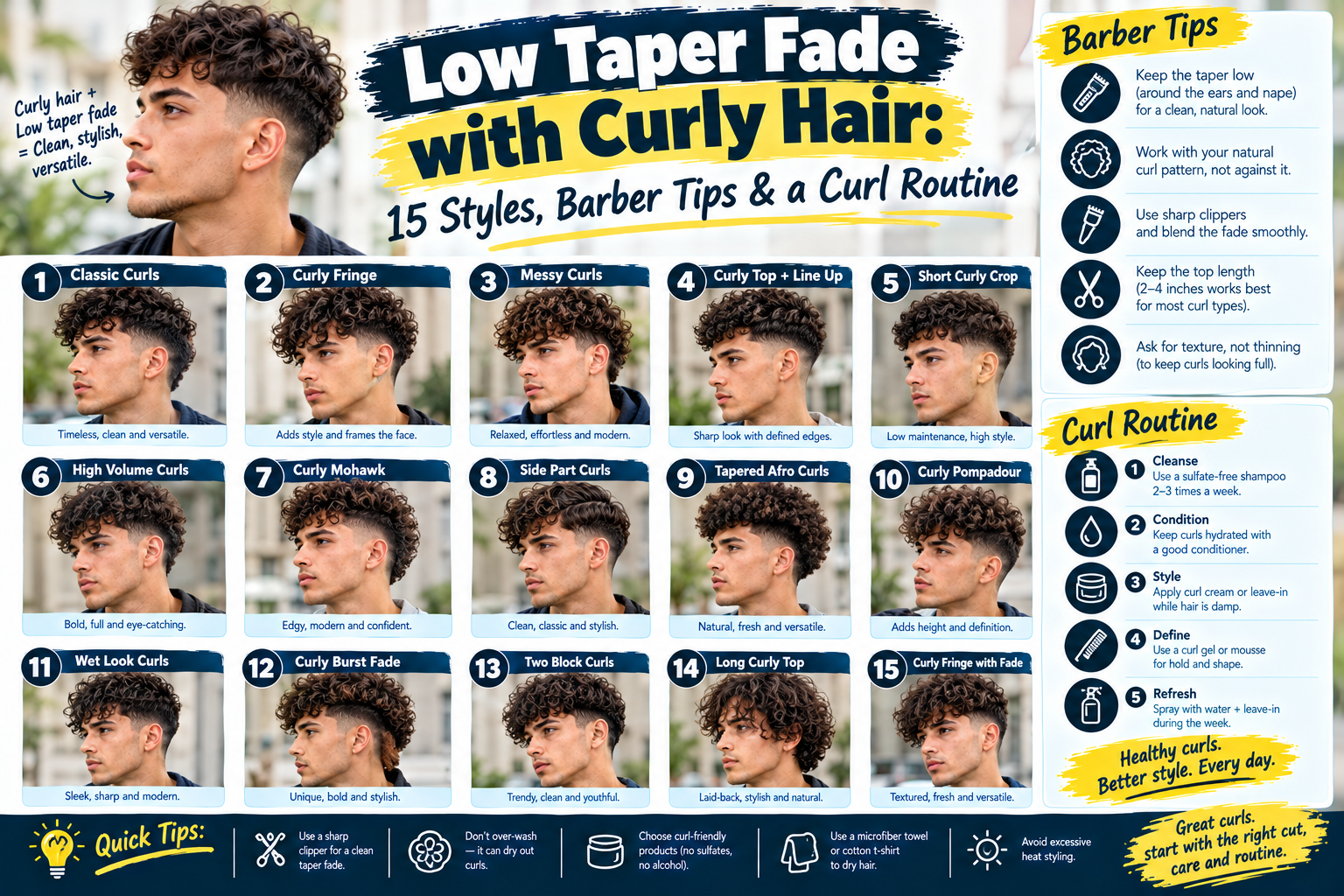
Curly hair and the low taper fade are one of the best combinations in men's hair. The taper removes the bulk that makes curls puff out above the ears, while the top stays full, round and defined. Instead of fighting your texture, the cut frames it.
This guide covers 15 of the best curly low taper fade styles, how to describe them to your barber, and a realistic curl routine you can do in five minutes.
Quick Facts
| Best curl types | 2C (wavy-curly) through 4C (coily) |
| Fade height | Low, around the top of the ear |
| Bottom length | Skin, #0 or #0.5 |
| Top length | 1 to 6 inches depending on style |
| Touch-up | Every 2–3 weeks for the taper; 6–8 weeks for the curls |
| Key products | Leave-in conditioner, curl cream, light gel |
Know Your Curl Type
Your curl pattern affects which styles are realistic:
- Loose curls (2C–3A): large, springy S-shapes. Very versatile; can be worn messy, fringed or pushed back.
- Medium curls (3B–3C): tighter ringlets with lots of volume. Best worn shaped and natural on top.
- Tight curls and coils (4A–4C): dense, compact pattern. Best for shaped tops, afros, twists, sponge curls and 360 waves.
15 Best Low Taper Fade Curly Hair Styles
1. Classic Curly Top
Natural curls of 2 to 3 inches on top, shaped into a rounded silhouette, with a clean low taper. Works for every curl type and almost every face shape. Ask for: "Keep the curls, shape the top round, low taper to skin."
2. Short Curly Crop
About an inch of curls on top. Low effort and very neat, especially for work or sport. Curls are defined but compact.
3. Curly Fringe
Curls fall forward onto the forehead. Great for oblong faces and higher foreheads. Pair it with a textured fringe shape for loose curls.
4. Messy Curly Crop
A short, deliberately undone version, scrunched with a little sea salt spray on loose curls. Very current and very easy.
5. Long Curly Top
4 to 6 inches of curls on top with the taper keeping the sides neat. Dramatic volume and movement. Needs good moisture and a diffuser for shape.
6. Curly Quiff
Loose curls pushed up and slightly back at the front. Adds height for round faces. See quiff for technique.
7. Curly Side Part
A soft part with curls falling to one side. More polished; good for offices. Avoid a hard, shaved part line, which can look stiff with curls.
8. Curly Curtains
Medium-length loose curls parted in the middle. A strong look for 2C–3A hair. See curtains.
9. Curly Mohawk (Faux Hawk)
Curls kept longer through the center, shorter toward the sides. Pairs especially well with a burst fade.
10. Curly Modern Mullet
Curls on top and longer at the back with a low taper on the sides. Very popular with loose curls. See modern mullet.
11. Sponge Curls
Tight, uniform coils created with a twist sponge on 1 to 2 inches of coily hair. Clean and defined with a low taper.
12. Curly Top with a Line-Up
A crisp hairline at the front sharpens the whole look. Keep it natural if your hairline is receding. See line-up.
13. Curly Hair with a Beard
A low taper that connects smoothly into a beard creates a strong, balanced frame. See with beard.
14. Blonde or Highlighted Curls
Curls with lightened tips or full blonde color stand out against the darker taper. See blonde hair for aftercare.
15. Curly Drop Fade
The taper curves down behind the ear toward the nape, following the head shape. Adds a little extra style. See drop fade.
How to Ask Your Barber
Curly hair shrinks when dry, so communication matters:
"Low taper fade, starting at the top of the ear, skin at the bottom. Please keep as much curl on top as possible: I want about [X] inches when stretched. Cut the top dry so you can see the shape, and keep a rounded silhouette."
Tips: - Ask for a dry cut on top if possible. Curls behave differently wet. - Mention shrinkage. Tight curls can shrink to a fraction of their stretched length. - Ask for the taper to be blended into the curls, not left as a shelf.
More examples are in how to ask your barber.
A 5-Minute Curl Routine
- Wash 2–3 times a week, not daily, with a gentle shampoo. Condition every time.
- On damp hair, apply a leave-in conditioner from mid-lengths to ends.
- Apply curl cream by raking it through with your fingers, then scrunching upward.
- Optional: add a light gel for longer-lasting definition.
- Air-dry or diffuse on low heat. Don't touch your hair while it dries; that causes frizz.
- Once dry, scrunch out any stiffness from the gel.
See our products guide for more.
Maintenance
- Taper: every 2–3 weeks to keep it crisp.
- Top: shape every 6–8 weeks to remove split ends and keep the silhouette.
- Night: sleep on a silk or satin pillowcase, or wear a durag or bonnet, to reduce frizz.
- Refresh: on non-wash days, mist with water and a little leave-in conditioner.
Common Mistakes
- Brushing dry curls, which breaks up the pattern and creates frizz.
- Using heavy, alcohol-based products that dry curls out.
- Thinning shears on curls, which can cause frizz and uneven shrinkage.
- Leaving bulk above the ears, which makes the head look wide. That's exactly what the taper fixes.
Frequently Asked Questions
Is a low taper fade good for curly hair?
Yes. It is one of the best cuts for curly hair because it removes bulk on the sides while keeping the curls on top full and defined.
How long should curly hair be for a low taper fade?
Anything from about 1 inch (sponge curls, short crops) to 6 inches (long curly tops) works. Around 2–3 inches is the most versatile.
How do I keep curls defined?
Moisture plus hold: leave-in conditioner and curl cream, with an optional light gel. Avoid touching the hair while it dries.
Should I get a skin fade with curly hair?
A skin finish at the very bottom looks sharp and clean with curls. If you want a softer look or a slower grow-out, ask for a #0.5 instead.