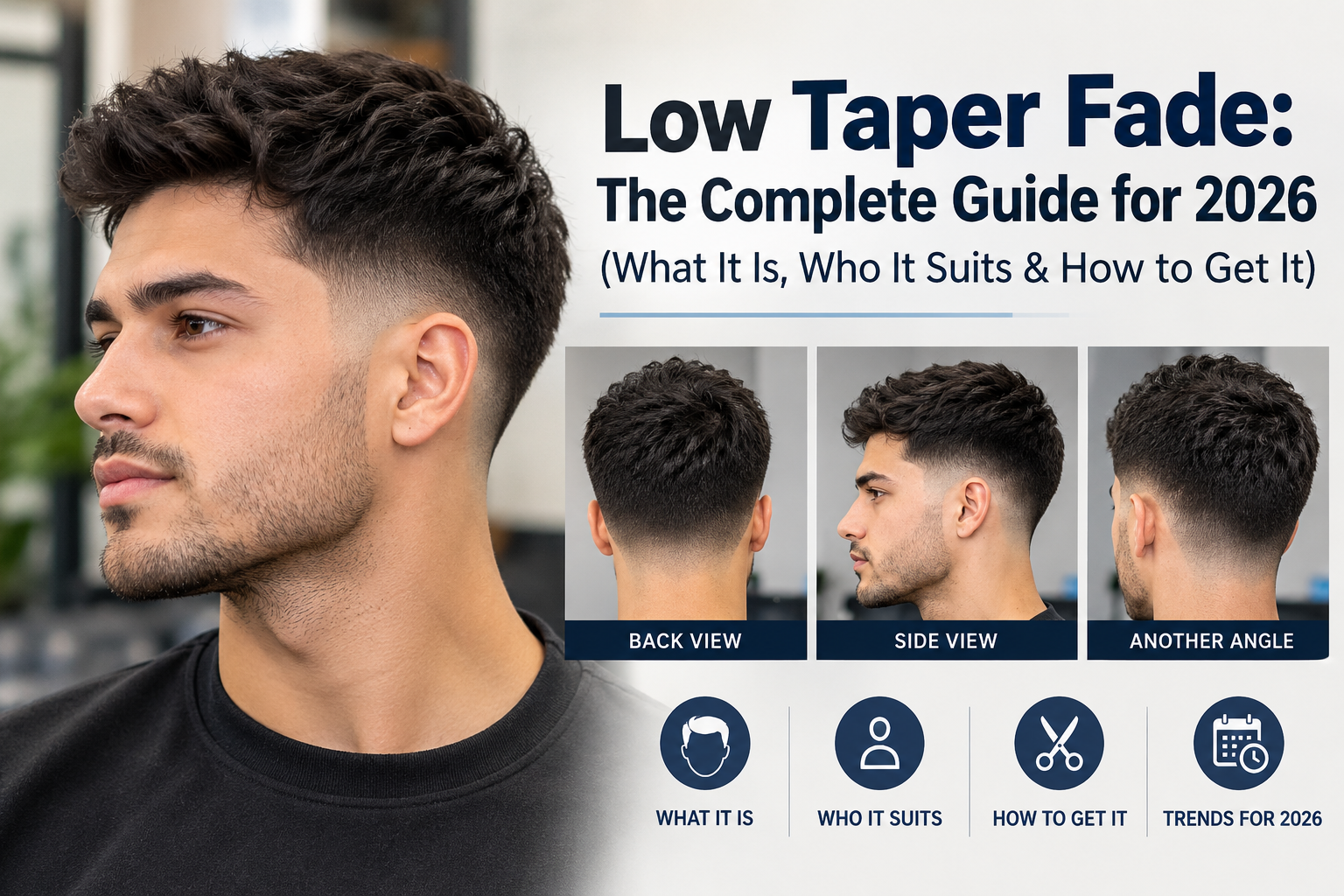
Blonde hair with a low taper fade can look striking, whether you are naturally blonde or you have bleached your top for contrast. There are two very different situations here: natural blonde hair, which changes how the fade looks, and dyed blonde, which adds a strong color contrast against a darker taper. This guide covers both.
Quick Facts
| Fade height | Low |
| Bottom length | Go one guard longer than usual on natural blonde hair |
| Styles | Platinum, golden, ash, highlights, frosted tips, natural blonde |
| Upkeep (dyed) | Toner every few weeks; root touch-ups every 4–8 weeks |
| Products | Purple shampoo, deep conditioner, heat protectant |
Natural Blonde Hair and Fades
Light hair is less visible against the scalp, so:
- The fade looks shorter. A #1 on blonde hair can look like a #0.5 on dark hair.
- The blend is harder to see, which is good for hiding small imperfections.
- Skin fades look very bare. Many blondes prefer a #0.5 or #1 at the bottom.
Tip: ask for one guard longer than you would choose with dark hair. See clipper guard numbers.
12 Best Low Taper Fade Blonde Styles
1. Natural Blonde Textured Crop
See textured crop.
2. Platinum Top with Dark Taper
Bleached top, natural darker sides. Maximum contrast.
3. Golden Blonde Curls
Warm blonde curls. See curly hair.
4. Ash Blonde Fringe
Cool-toned fringe. See fringe.
5. Frosted Tips
Only the ends of the hair are lightened. A 2000s revival.
6. Blonde Highlights
Lighter streaks through darker hair. Subtle and natural.
7. Bleached Buzz Cut
See buzz cut.
8. Blonde Curtains
See curtains.
9. Blonde Mullet
See modern mullet.
10. Blonde Twists
See twists.
11. Blonde Afro
See afro.
12. Blonde Quiff
See quiff.
Bleaching: What to Know
Bleaching lightens hair by breaking down its natural pigment. It is a chemical process that can weaken hair, so:
- Have it done professionally, especially for big color changes or dark starting colors.
- Expect more than one session to reach platinum from dark hair.
- Do a patch test to check for skin reactions.
- Never bleach irritated or broken skin.
- Toner is often needed to remove yellow or orange tones.
Bleached Hair Aftercare
- Use purple shampoo once or twice a week to reduce brassiness.
- Deep-condition weekly. Bleached hair is more porous and dries out.
- Use a heat protectant before blow-drying.
- Wash less often to preserve color and moisture.
- Use lightweight products that don't leave residue.
- Protect from sun and chlorine, which can change the color.
How to Ask Your Barber
"Low taper fade, keep the bottom at a #0.5 or #1 because my hair is light. Sides at a #3 or #4."
For bleached tops: get the cut first, then the color, or ask your barber whether they recommend color first. Many stylists prefer to cut after coloring to remove damaged ends.
Choosing a Blonde Shade
| Shade | Looks best with | Upkeep |
|---|---|---|
| Golden / honey | Warm or olive skin, brown eyes | Moderate |
| Ash blonde | Cool or fair skin | Toner to avoid brassiness |
| Platinum / icy | Strong contrast lovers; most skin tones | High: regular toning and root touch-ups |
| Highlights | Almost everyone; subtle | Low: roots blend naturally |
| Frosted tips | Short textured styles | Low to moderate |
If you are unsure, start with highlights. They grow out softly, and you can go lighter later.
Blonde and Your Taper: Contrast Choices
When the top is bleached and the taper is your natural dark color, the contrast is part of the look. When the whole head is lightened, the taper becomes much less visible. Many people prefer to keep the taper natural so the blonde top stands out.
Signs Bleached Hair Needs Help
- Hair feels rough or straw-like when dry.
- Strands stretch and snap when wet.
- There is lots of breakage when brushing.
- The color turns yellow or orange quickly.
If you see these signs, pause further lightening, focus on deep conditioning, and talk to a professional colorist. A fresh cut that removes damaged ends often helps a lot.
Blonde in the Sun
Sun and chlorine can change blonde hair's color and dry it out. Wear a hat, rinse after swimming, and use a leave-in conditioner with UV protection if possible.
Frequently Asked Questions
Does a fade look different on blonde hair?
Yes. Light hair shows more scalp, so fades look shorter and higher contrast.
Should I bleach my hair at home?
For dramatic changes, a professional is strongly recommended. Bleach can damage hair and irritate skin if used incorrectly.
How long does blonde dye last?
The lightened hair stays lighter, but roots grow in at roughly half an inch a month. Toners can fade in a few weeks.
Can curly hair be bleached?
Yes, but curly and coily hair is more prone to dryness and breakage, so extra moisture care is essential.