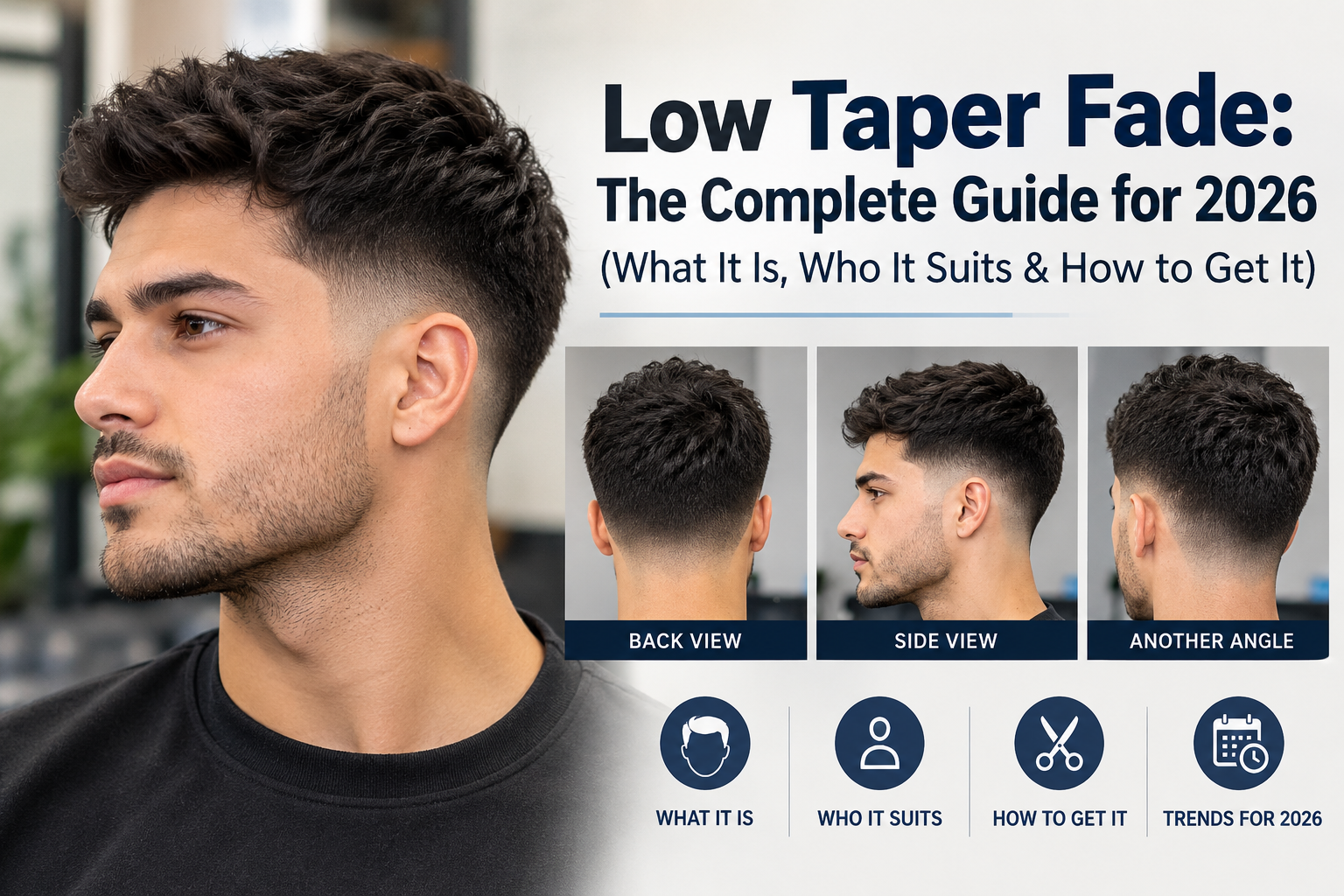
A drop fade is a fade that "drops" down behind the ear, curving toward the nape instead of running in a straight horizontal line. It follows the natural shape of the head, which many people find more flattering, especially from the side. Combined with a low taper, the drop is subtle but noticeable, and it gives a classic cut a distinctive outline.
Quick Facts
| Shape | Starts at the temple or ear, curves down behind the ear toward the nape |
| Fade height | Low (low drop) or mid (mid drop) |
| Bottom length | Skin to #0.5 |
| Best with | Crops, curls, waves, afros, twists |
| Touch-up | Every 2 weeks |
Drop Fade vs Burst Fade vs Regular Taper
| Regular low taper | Drop fade | Burst fade | |
|---|---|---|---|
| Line | Straight around the head | Curves down behind the ear | Semicircle around the ear |
| Back of head | Tapered at the nape | Tapered at the nape, lower | Left longer |
| Look | Classic | Contoured | Edgy |
See burst fade for the semicircle style.
Why the Drop Flatters
The back of the head curves inward toward the neck. A straight-line fade can look like it cuts across that curve. A drop fade follows it, so the cut looks contoured to your head, especially in side profile. It can also make a slightly flat back of the head look rounder.
10 Best Low Taper Drop Fade Styles
1. Drop Fade Textured Crop
See textured crop.
2. Drop Fade with Curls
See curly hair.
3. Drop Fade Afro
See afro.
4. Drop Fade with Waves
See 360 waves.
5. Drop Fade with Twists
See twists.
6. Drop Fade French Crop
See French crop.
7. Drop Fade Comb Over
See comb over.
8. Drop Fade with a Design
A line following the drop curve. See hair designs.
9. Drop Fade Mullet
See modern mullet.
10. Drop Fade with a Beard
See with beard.
How to Ask Your Barber
"Low drop fade. Start low at the front, around the top of the ear, and drop the line down behind the ear toward the nape. Skin at the bottom, blended into a #3."
Use your finger to trace the curve you want behind your ear.
How Barbers Cut a Drop Fade
- Front guide: the barber sets the fade line at the front, near the sideburn or top of the ear.
- The drop: behind the ear, the line curves downward, following the bone at the back of the head (the occipital bone).
- Nape: the line finishes low at the nape, connecting both sides.
- Blending: the barber blends upward from the curved line, just as with a regular fade.
The tricky part is making both curves identical. Good barbers check from behind with a mirror and adjust until both sides match.
Low Drop vs Mid Drop
| Low drop fade | Mid drop fade | |
|---|---|---|
| Starting point | Top of the ear | Temple |
| Curve | Gentle | More pronounced |
| Look | Subtle, contoured | Sporty, noticeable |
| Best for | Work, everyday | Bold styles, curls and waves |
Who Benefits Most from a Drop Fade?
- People with a flat back of the head: the curve suggests more roundness.
- Curly and coily hair: the curve shows clearly against dense hair.
- Anyone who finds a straight fade line looks "cut across" their head shape.
Drop Fade Maintenance
The curve behind the ear is the first thing to blur as hair grows. A quick touch-up every 2 weeks keeps it defined. If you trim your own neckline at home, follow the existing curve and never try to raise it.
Drop Fade vs Burst Fade: Which Should You Choose?
Choose a drop fade if you want a contoured, classic-looking fade that still tapers the nape. Choose a burst fade if you want length at the back of the head, for example for a mullet or mohawk.
Frequently Asked Questions
What is a drop fade?
A fade that curves down behind the ear toward the nape, following the shape of the head.
Is a drop fade the same as a burst fade?
No. A burst fade forms a semicircle around the ear and leaves the back longer; a drop fade still tapers the nape.
Does a drop fade suit straight hair?
Yes. It shows clearly on straight hair, but the blend must be precise.
How often should I refresh a drop fade?
Every 2 weeks to keep the curve defined.