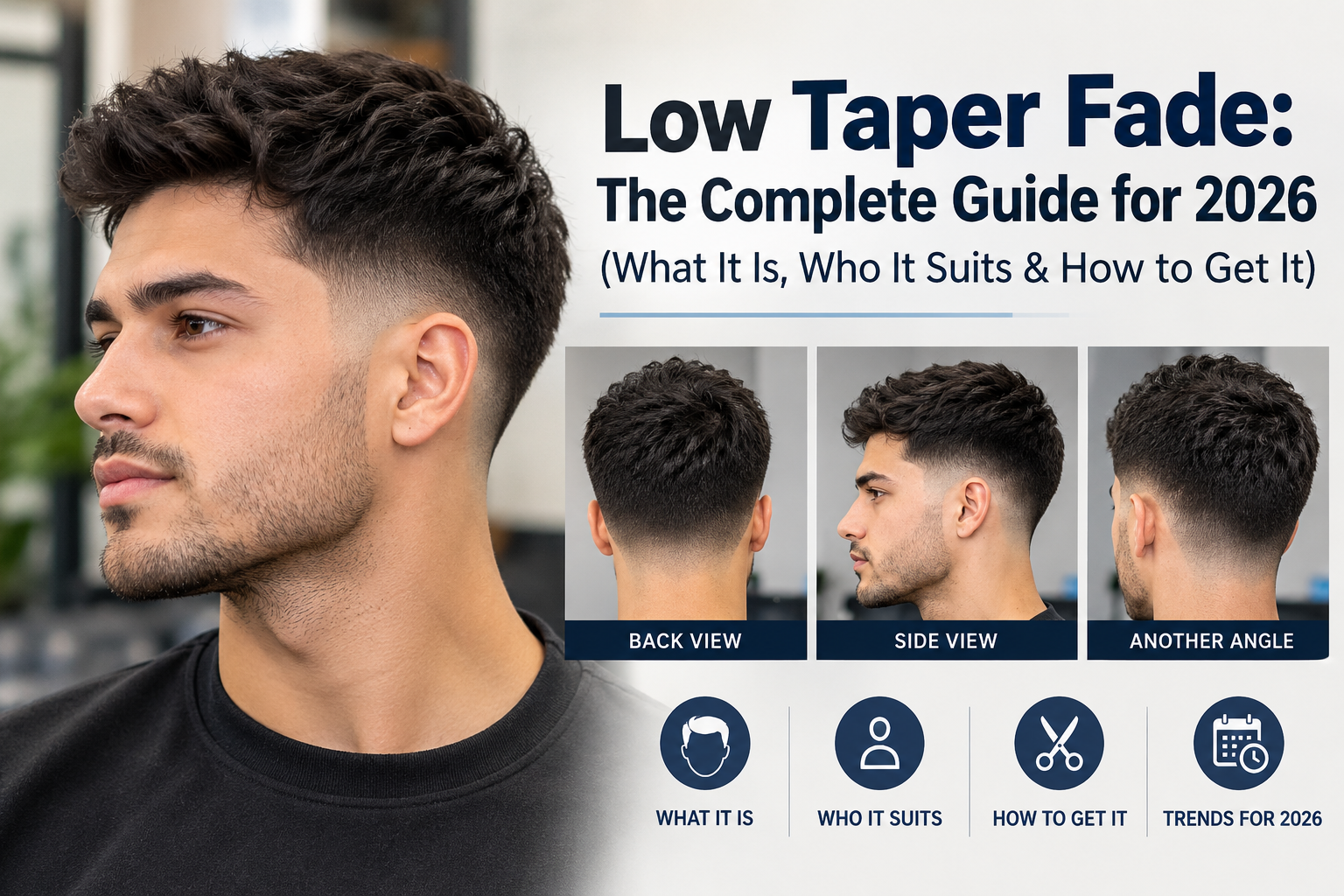
The French crop is one of the most reliable short haircuts in men's grooming. Short on top, with a neat fringe across the forehead, it is easy to style, flattering on many face shapes and particularly good at hiding a high or receding hairline. Paired with a low taper fade, it becomes clean, modern and incredibly low-maintenance.
Quick Facts
| Top length | 1 to 2.5 inches |
| Fringe | Short, usually stops above the eyebrows |
| Fade height | Low |
| Bottom length | Skin to #0.5 |
| Best hair types | Straight, wavy, thick; thin hair too |
| Face shapes | Oval, oblong, square, diamond, heart |
| Product | Matte paste or clay |
| Styling time | 1–2 minutes |
What Makes a French Crop?
The French crop has three defining features:
- Short length on top that is roughly even from crown to front.
- A forward fringe, which can be blunt and straight or choppy and textured.
- Shorter sides, traditionally scissor-cut or clipper-cut, now commonly faded.
It differs from the Caesar cut mainly in the fringe: a Caesar fringe is very short and straight, while a French crop fringe is a little longer and often textured.
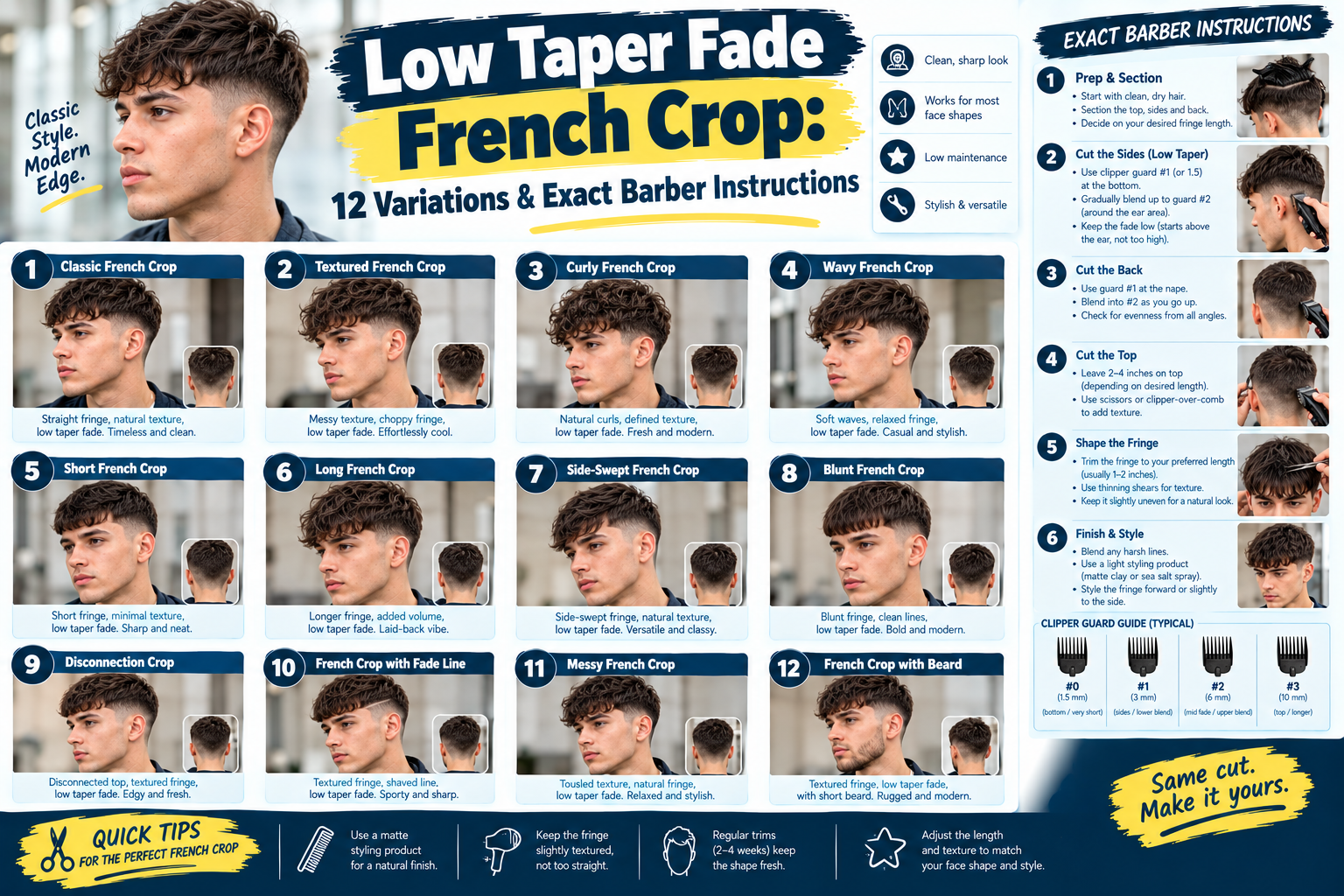
12 Best Low Taper Fade French Crop Styles
1. Classic French Crop
Blunt, straight fringe; short, even top; neat low taper. Clean and timeless.
2. Textured French Crop
Choppy, point-cut fringe and top with a matte finish. The most popular modern version.
3. Long French Crop
Slightly longer on top (2 to 2.5 inches) for more movement.
4. Short French Crop
About an inch on top, almost like a crew cut with a fringe.
5. Messy French Crop
Tousled pieces for an undone look. Uses sea salt spray.
6. French Crop with Skin Taper
Bare skin at the bottom for extra contrast. See skin taper.
7. French Crop with a Line-Up
Sharp outline at the temples. See line-up.
8. Curly French Crop
Short curls pushed forward. See curly hair.
9. French Crop with a Drop Fade
The fade dips behind the ear. See drop fade.
10. Blonde French Crop
Lightened top against darker sides. See blonde hair.
11. French Crop with a Beard
A strong, balanced look. See with beard.
12. Angled French Crop
The fringe is cut slightly shorter on one side for an asymmetric twist.
Who Should Get a French Crop?
- Receding hairlines: the fringe covers the temples. See our receding hairline guide.
- Thin hair: short, textured hair looks denser. See thin hair.
- Long faces: the horizontal fringe shortens the face.
- People with no time: two minutes of styling, maximum.
How to Ask Your Barber
"Low taper fade French crop. Taper starts at the top of my ear, down to a half guard at the bottom. On top, about 1.5 inches, slightly longer at the front. Fringe stopping above my eyebrows. Make it textured, point-cut, not a blunt line."
For a classic look, replace the last sentence with: "Cut the fringe straight across."
How to Style a French Crop
- Towel-dry.
- Optional: a quick blow-dry forward.
- Warm a small amount of matte paste in your palms.
- Rub it through from back to front, pushing the hair forward.
- Pinch the fringe into small pieces for texture.
That's it.
Maintenance
- Taper: every 2–3 weeks.
- Top and fringe: every 3–4 weeks to keep the shape tight.
A Short History of the French Crop
Short, forward-brushed hairstyles go back centuries, but the modern French crop became popular in European barbering in the late 20th century and spread through British street style. Its appeal is simple: it needs almost no styling, yet always looks neat. The textured, faded version that dominates today emerged when barbers began combining the classic cut with fades and matte styling products.
Choosing Your Fringe Length
The length of the fringe changes the entire look:
| Fringe position | Effect |
|---|---|
| Very short (top of forehead) | Sharp, minimal, close to a Caesar |
| Mid-forehead | Classic, balanced, most popular |
| Just above eyebrows | Softer, younger, covers more forehead |
If you have a long face or high forehead, choose a longer fringe. If you have a round face, a shorter fringe with a little lift at the front keeps the face from looking wider.
French Crop on Different Hair Types
- Straight hair: perfect for the classic blunt fringe. Point-cut for a modern version.
- Wavy hair: waves add texture naturally; keep the top slightly longer so the waves can form.
- Curly hair: a curly French crop is softer and rounder. Ask the barber to cut dry so the curls sit evenly.
- Thick hair: ask for weight removal so the top does not puff up.
- Thin hair: this is one of the best styles for thin hair; keep it short and textured.
The French Crop Grow-Out
Because the fringe is short, a French crop can lose its shape after 4 to 5 weeks. If you are trying to grow your hair longer, the French crop transitions easily into a textured fringe and later into curtains. Keep the taper refreshed and let the top grow.
Frequently Asked Questions
Is the French crop still in style in 2026?
Yes. The textured French crop with a low taper fade remains one of the most requested short haircuts.
Does a French crop work with a receding hairline?
Very well. The forward fringe covers the temples and creates a straight horizontal line.
What is the difference between a French crop and a textured crop?
They overlap. A French crop is defined by its forward fringe and short top; a textured crop focuses on choppy texture and can be messier.
How long does it take to grow a French crop?
From a buzz cut, roughly 2 to 3 months to have enough length for a fringe.