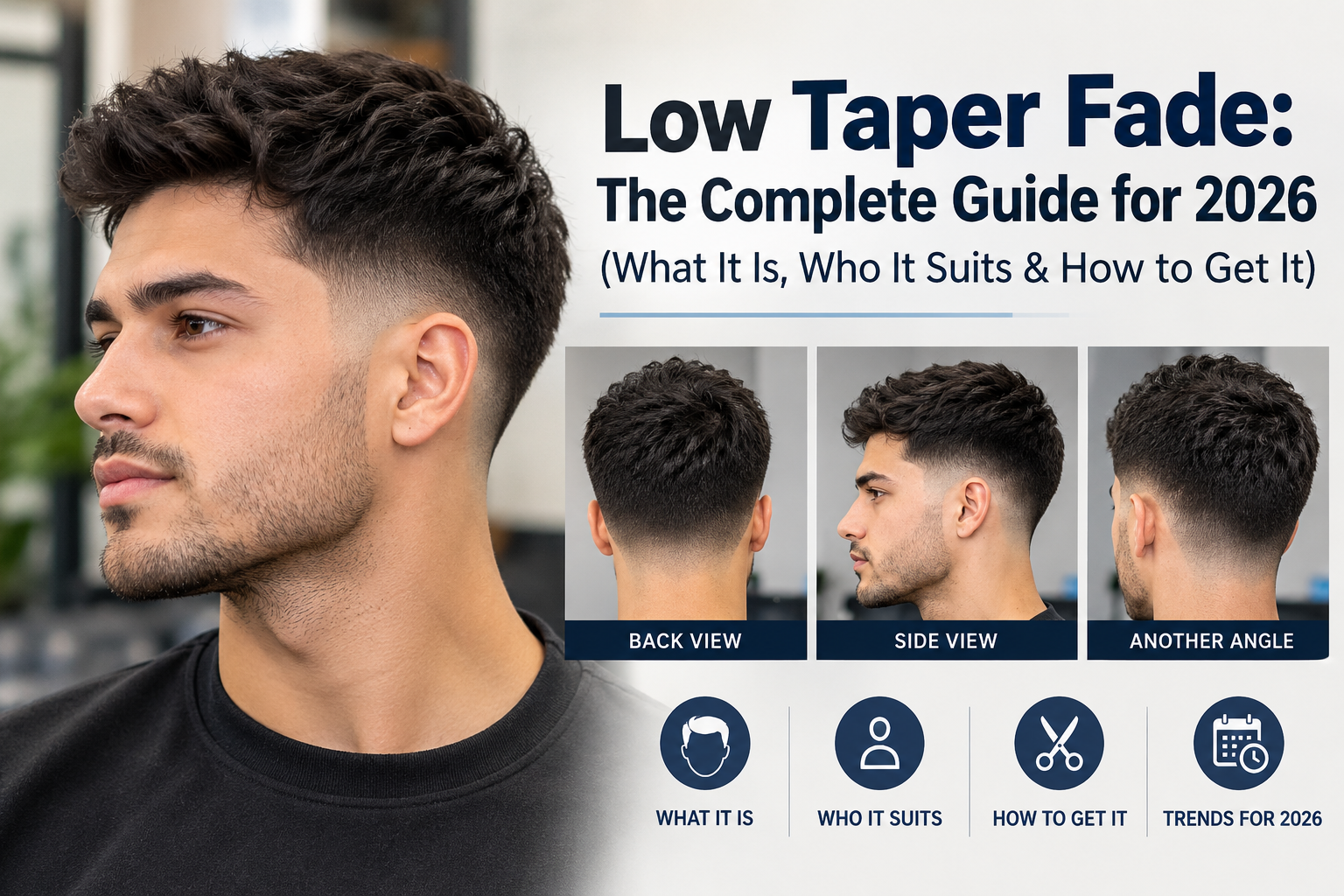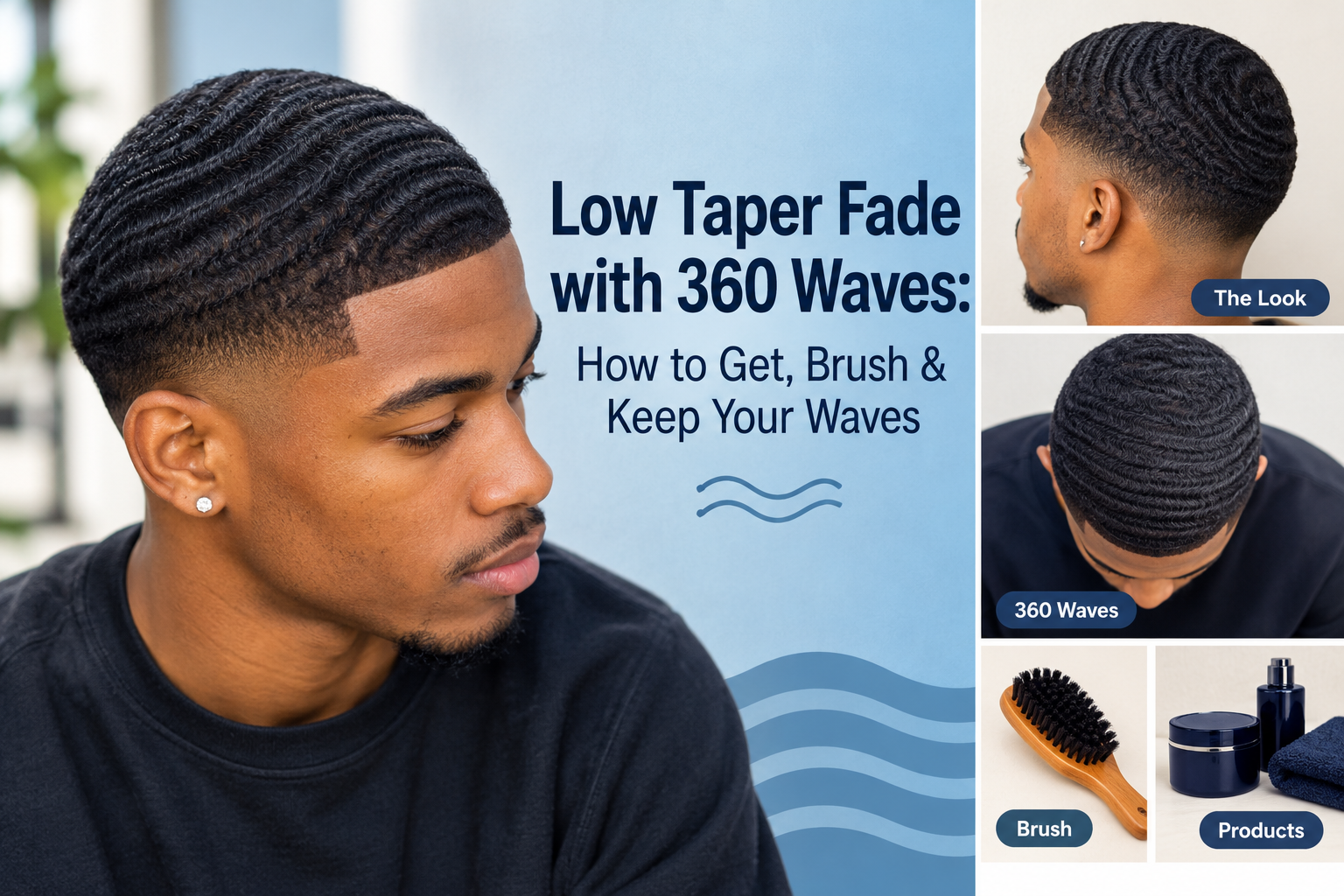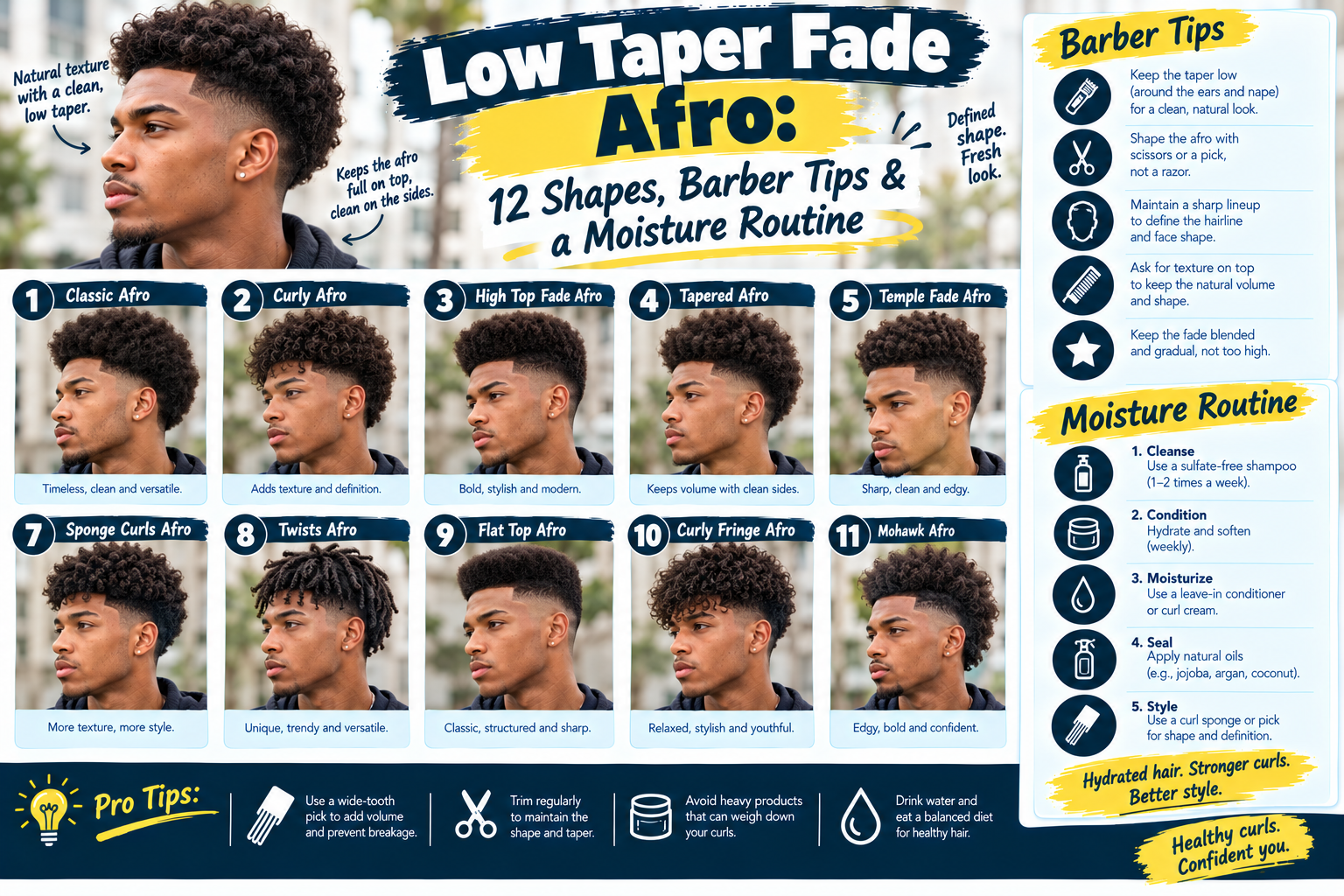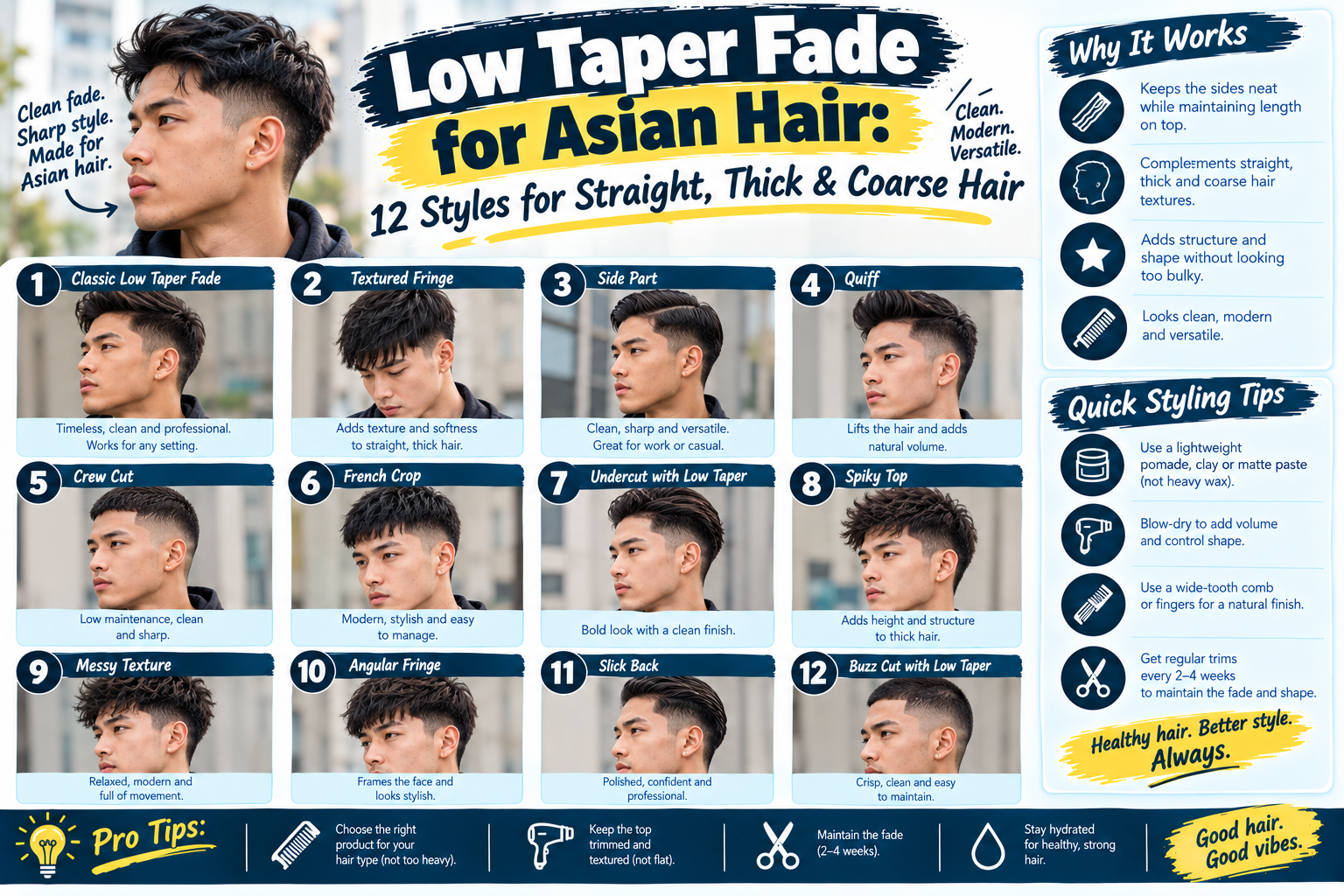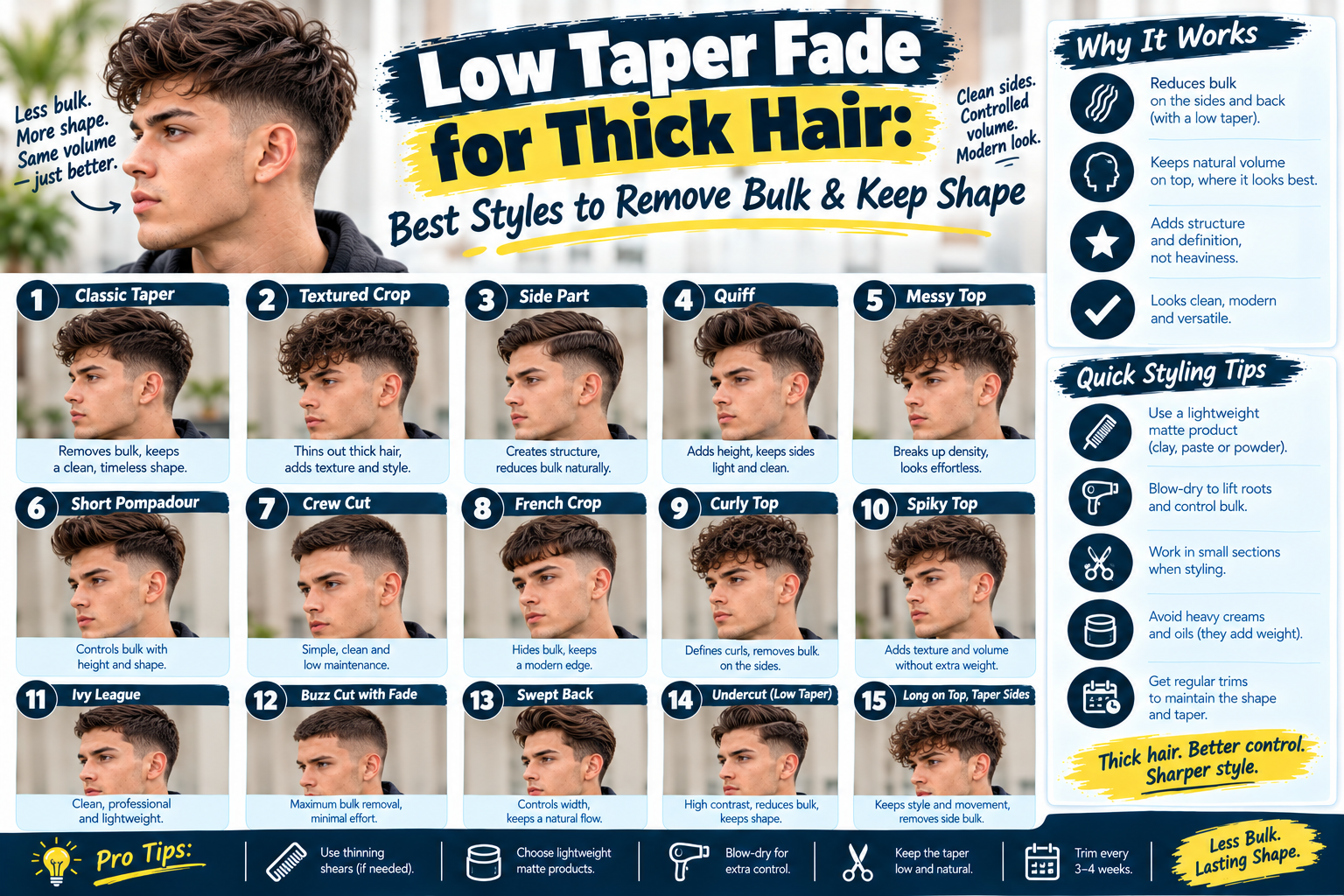
Thick hair is a gift, until it turns your head into a helmet two weeks after a haircut. The problem is rarely length; it is weight. Thick hair builds out sideways, especially above the ears and at the back. A low taper fade removes that bulk where it matters while leaving you plenty to style on top.
Quick Facts
| Fade height | Low (mid also works well) |
| Bottom length | Skin to #0.5 |
| Sides above the taper | #2 or #3 (shorter than usual to reduce bulk) |
| Top length | 1 to 5 inches |
| Touch-up | Every 2–3 weeks |
| Key products | Matte clay, strong paste, pomade for slick styles |
Why Thick Hair Needs a Taper
Thick hair has two common issues:
- Width above the ears. Even short sides puff out and make the head look wider.
- Shelf effect. Long, heavy hair on top sits on top of the sides like a ledge.
A low taper cleans the lower sides and nape, and when combined with weight removal on top, it gives thick hair a controlled, deliberate shape.
Best Low Taper Fade Styles for Thick Hair
1. Textured Crop
Thick hair holds texture beautifully. Short, choppy and full. See textured crop.
2. Quiff
Thick hair has the density to hold a strong quiff all day. See quiff.
3. Pompadour
The classic big-volume style. Thick hair is ideal for it. See pompadour.
4. Slick Back
Thick hair slicks back evenly without showing the scalp. See slick back.
5. Comb Over
Full and polished. See comb over.
6. Crew Cut
The easiest way to manage very thick hair. See crew cut.
7. Messy Fringe
Thick hair pushed forward in heavy, piecey sections. See fringe.
8. Blowout
Thick hair creates huge, structured volume. See blowout.
9. Long Thick Hair
Long thick hair looks great with a low taper that removes weight around the ears and nape. See long hair.
10. Modern Mullet
Thick hair gives the mullet volume at the back. See modern mullet.
How to Ask Your Barber
"My hair is very thick and gets bulky fast. Low taper fade, skin at the bottom, and keep the sides at a #2 or #3 above it. On top, please remove weight with texturizing or thinning, so it doesn't sit like a helmet. I want [style], about [X] inches."
Useful techniques to mention:
- Texturizing / point cutting: creates separation.
- Thinning shears (used carefully): remove internal bulk without changing length.
- Slide cutting or channel cutting: reduces weight while keeping a natural shape.
- Undercutting slightly: making the hair directly under the top a bit shorter helps it sit flat.
Styling Thick Hair
- Dry thoroughly. Thick hair holds water; style on fully or almost fully dry hair.
- Blow-dry into shape. Thick hair follows the direction it is dried in.
- Use stronger hold. A matte clay or strong paste for textured looks; pomade for slick styles.
- Work product evenly from the roots. Thick hair often has an untouched middle layer.
See our products guide for more.
Common Mistakes
- Leaving the sides at a #4 or longer. On thick hair, that creates bulk.
- Light products. Creams and sea salt sprays often cannot hold thick hair.
- Going too long between cuts. Thick hair loses shape fast. Every 3–4 weeks for the top.
- Over-thinning. Too much thinning creates frizz and fluff. Ask for moderate weight removal.
Thick Hair vs Coarse Hair: Why It Matters
People often say "thick" when they mean two different things:
- Thick (dense) hair means lots of hairs per square centimetre. The scalp is barely visible even when cut short.
- Coarse hair means each strand is wide in diameter. It feels stiff and holds shape well, but can resist lying flat.
Many people have both. Dense hair needs weight removal; coarse hair needs direction training (blow-drying the roots where you want them to go). If your hair is coarse but not dense, avoid heavy thinning, which can make it spiky. If it is dense but fine, thinning shears are more useful.
The "Helmet Stage" and How to Avoid It
Thick hair usually looks best for about two weeks after a cut, then starts to puff out. The problem appears first in three spots:
- Above the ears, where hair grows outward.
- The crown, where hair often stands up.
- The back of the head, where weight builds into a "shelf."
A low taper solves the first and helps the third. For the crown, ask your barber to leave it slightly longer so the weight pushes it down, rather than cutting it short so it stands up. Booking a quick taper refresh at two and a half to three weeks prevents the helmet stage completely.
Daily Styling Time for Thick Hair
| Style | Approximate daily time |
|---|---|
| Crew cut or buzz | 0–1 minute |
| Textured crop | 2–3 minutes |
| Comb over or side part | 3–5 minutes |
| Quiff or blowout | 5–8 minutes |
| Pompadour | 8–10 minutes |
If you want minimal effort, choose a shorter style. Thick hair rewards structure, but structure takes time.
Heat and Thick Hair
Because thick hair holds water, people with thick hair often blow-dry on high heat for a long time. That can dry out the hair and cause frizz. Rough-dry the hair on medium heat until it is about 80 percent dry, then use focused heat only to set the shape. A heat protectant spray helps if you blow-dry daily.
Frequently Asked Questions
Is a low taper fade good for thick hair?
Yes. It removes bulk above the ears and at the nape, where thick hair causes the most width.
Should I thin out thick hair?
Moderate weight removal helps, but over-thinning causes frizz. Texturizing and point cutting are usually better than heavy thinning.
What product holds thick hair best?
A strong matte clay for textured styles and a strong-hold pomade for slick or classic styles.
Is a mid fade better than a low fade for thick hair?
A mid fade removes more bulk, so it can be easier to manage. A low taper is still a great option if the sides above it are kept short.