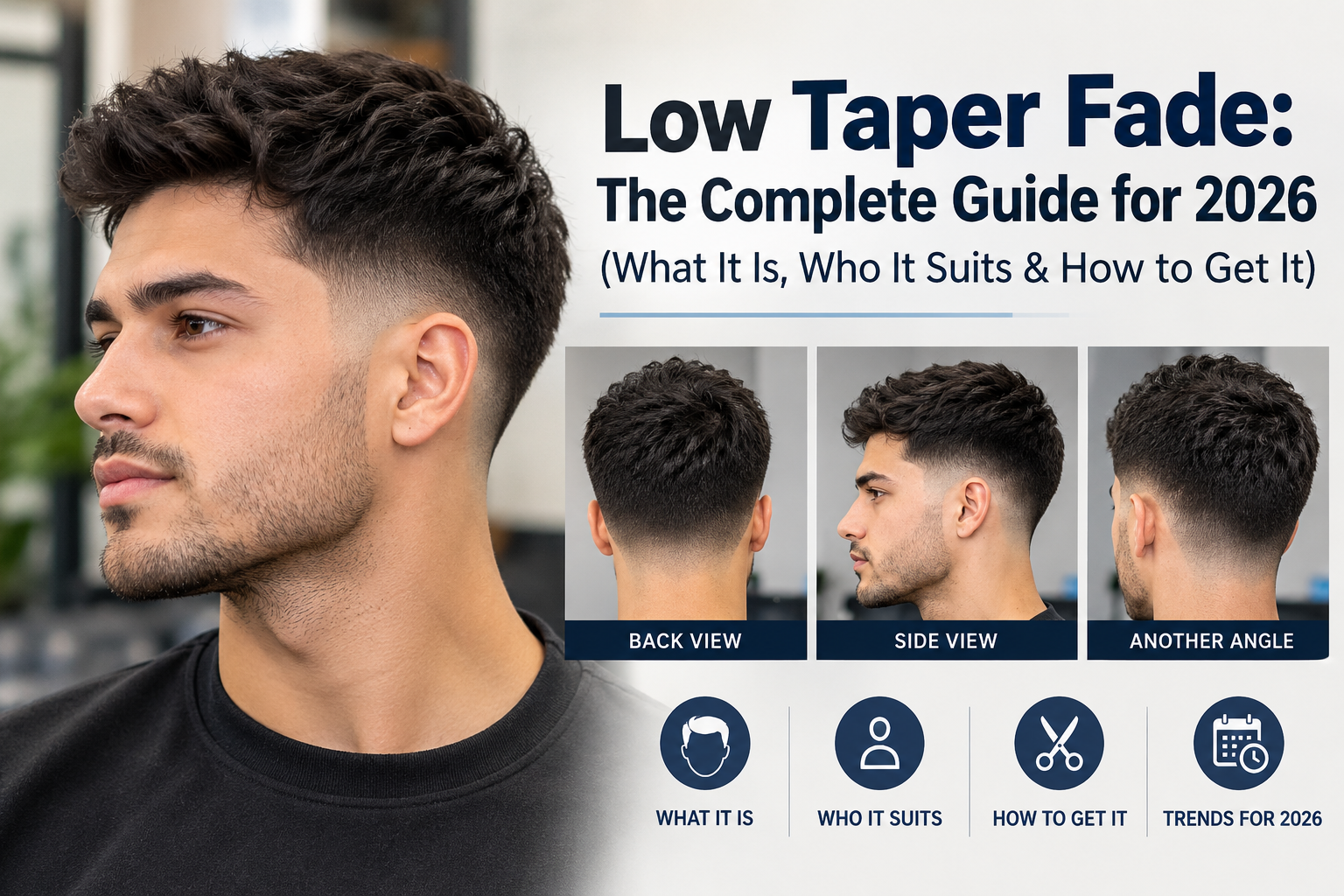
Locs, also called dreadlocks or dreads, are a long-term hairstyle with deep cultural roots in many communities around the world. A low taper fade gives locs a clean, modern frame: the sides stay crisp and short while the locs on top grow and mature. It is a popular way to keep locs looking neat in professional settings and during the early stages when locs are still forming.
Quick Facts
| Hair types | Best on coily and curly hair; possible on other types with patience |
| Starting length | About 2–4 inches for starter locs |
| Fade height | Low |
| Bottom length | Skin to #0.5 |
| Retwist | Every 4–8 weeks |
| Key products | Residue-free shampoo, light oil, rosewater or water spray |
Ways to Start Locs
| Method | How it works | Best for |
|---|---|---|
| Comb coils | Hair coiled with a fine-tooth comb | Short coily hair |
| Two-strand twists | Twists left to lock over time | Medium-length coily hair |
| Palm rolling | Sections rolled between palms | Defined, uniform locs |
| Interlocking | A tool pulls the end of the loc through the root | Many hair types; tight roots |
| Freeform | Hair left to lock naturally with minimal manipulation | Organic, unique locs |
12 Best Low Taper Fade Loc Styles
1. Starter Locs with a Taper
Short comb coils or twists on top with a sharp low taper. Keeps the early stage looking neat.
2. Short Locs
Locs of a few inches, standing up or falling slightly.
3. High Top Locs
Locs gathered on top, sides tapered. Bold and clean.
4. Locs Tied Up (Loc Bun)
Locs tied into a bun with a clean taper. See man bun.
5. Locs in a Ponytail
Pulled back and tied, showing the taper.
6. Freeform Locs
Organic, irregular locs with a neat taper.
7. Medium Locs
Shoulder-length locs with clean edges around the ears.
8. Locs with a Line-Up
Sharp front hairline. See line-up.
9. Locs with a Design
Lines or patterns in the taper. See hair designs.
10. Colored Loc Tips
Bleached or dyed tips. See blonde hair.
11. Locs with a Burst Fade
The fade curves around the ear. See burst fade.
12. Locs with a Beard
Strong, balanced look. See with beard.
How to Ask Your Barber
"Low taper fade, skin at the bottom, starting just above the ear. Don't touch my locs; just taper the sides and clean up the edges around the ears and neck."
Your loctician handles the locs (retwisting, interlocking), while your barber handles the taper.
Loc Care Routine
- Wash every 1–2 weeks with a residue-free shampoo, focusing on the scalp.
- Dry thoroughly. Locs can trap moisture; let them dry completely to avoid odor and mildew.
- Moisturize lightly with water or a light spray and a few drops of oil on the scalp.
- Retwist or maintain roots every 4–8 weeks; avoid over-twisting, which can weaken the roots.
- Sleep with a satin bonnet or durag.
- Refresh the taper every 2–3 weeks.
Common Mistakes
- Heavy waxes and creams, which cause buildup inside locs.
- Retwisting too often or too tightly, which can thin the roots.
- Not drying locs properly.
- Ignoring the scalp. A healthy scalp grows healthy locs.
Locs and Professional Settings
Locs are a respected, culturally significant hairstyle, and in many places workplace and school policies have been updated to protect natural and protective hairstyles. A low taper adds a neat frame that works well in professional settings. Clean, moisturized locs with a sharp taper look polished in any environment.
Taper Placement with Locs
| Loc length | Taper suggestion |
|---|---|
| Starter locs (2–4 in) | Low taper with skin at the bottom; keeps the in-between stage tidy |
| Medium locs (to the ears/chin) | Low taper around the ears and nape |
| Long locs (shoulders+) | Taper underneath and at the nape, visible when tied up |
Common Loc Stages
Locs typically go through several stages: a starter stage where they look like coils or twists, a budding stage where they begin to puff and tangle internally, a teen stage where they can look frizzy and unpredictable, and a mature stage where they are dense and settled. The timeline varies widely between people. A fresh taper during the budding and teen stages makes the overall look more polished while the locs do their work.
Products to Avoid
- Heavy waxes and petroleum-based products that cause buildup.
- Thick conditioners left inside locs without rinsing well.
- Products with a lot of residue.
Choose lightweight sprays, residue-free shampoos and light oils, and always dry your locs fully after washing.
Frequently Asked Questions
How long does it take for locs to mature?
It varies widely, often many months to a year or more depending on hair type, method and care.
Can you have locs and a fade?
Yes. A low taper fade around the ears and nape is one of the most popular ways to frame locs.
How often should I retwist my locs?
Commonly every 4 to 8 weeks. Retwisting too often can weaken the roots.
Do I need special shampoo for locs?
A residue-free or clarifying shampoo is recommended to avoid buildup.