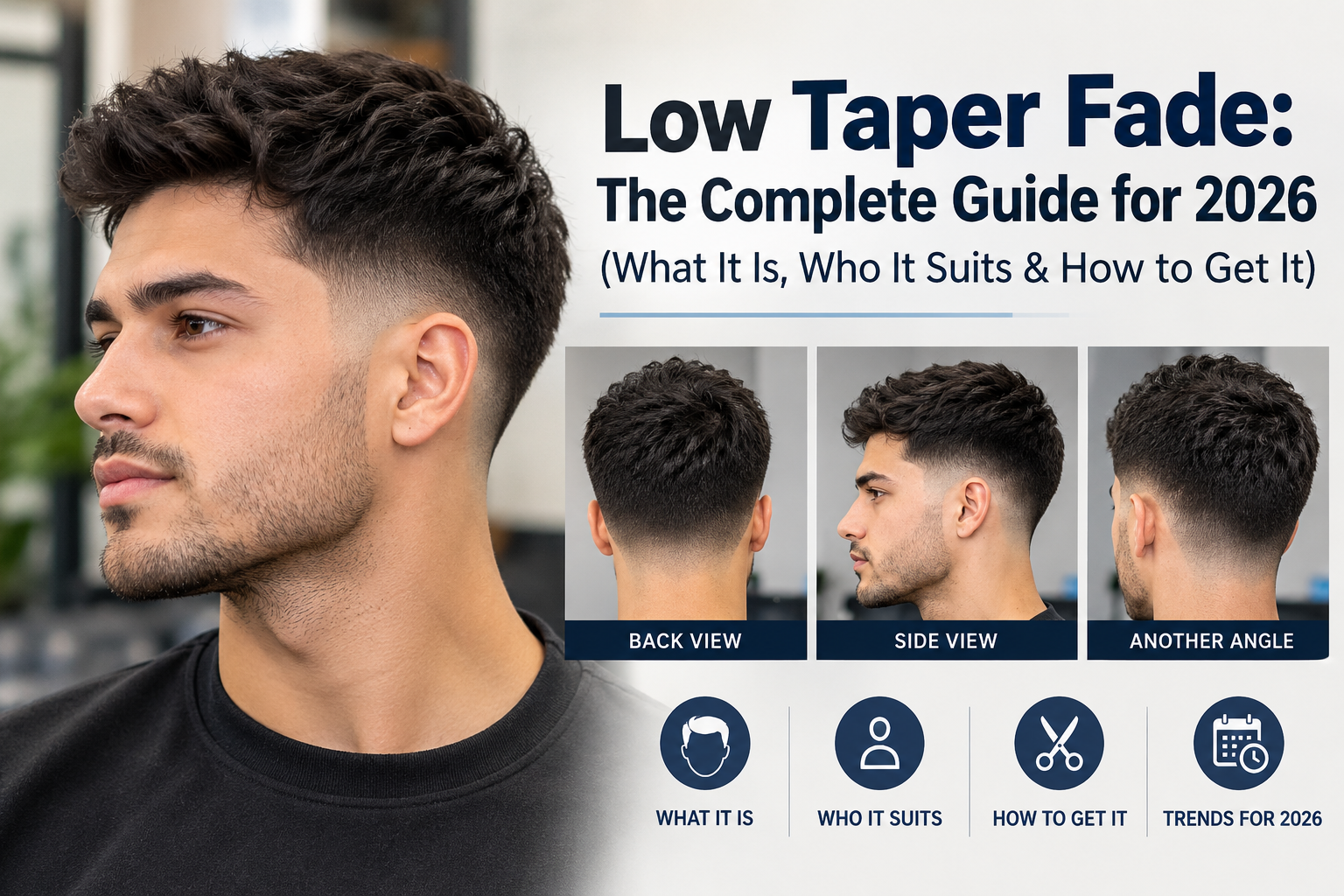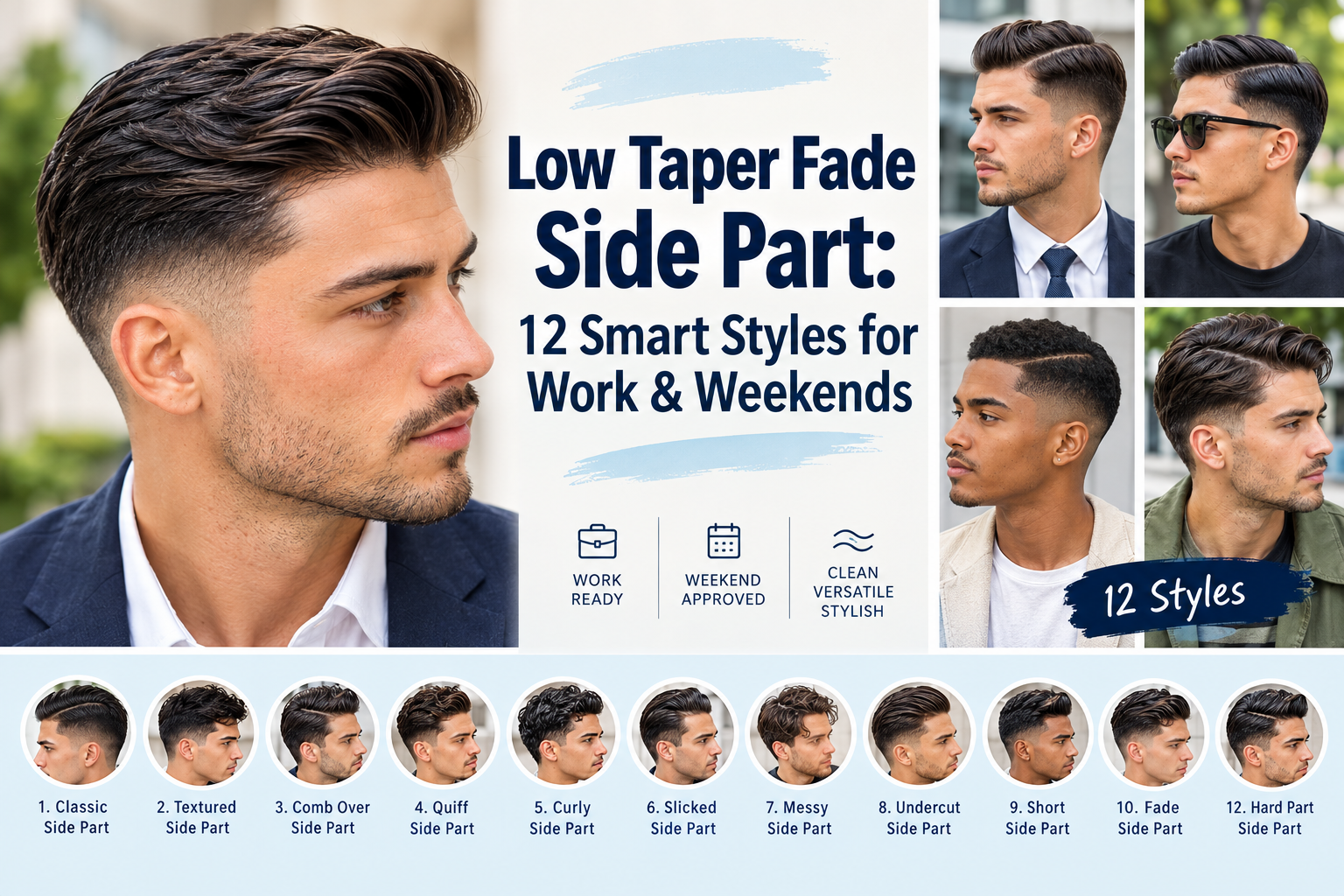
The side part is the most dependable haircut in a man's repertoire. It looks smart in an office, appropriate at a wedding and relaxed on a weekend when you loosen it up. With a low taper fade underneath, the classic side part gets a cleaner, more modern outline while keeping its gentlemanly character.
Quick Facts
| Top length | 2 to 4 inches |
| Fade height | Low |
| Bottom length | #0.5 to #1 (skin optional) |
| Best hair types | Straight, wavy, thick, fine (with care) |
| Face shapes | Round, oval, square, heart |
| Product | Paste, cream, pomade |
| Styling time | 2–4 minutes |
How to Find Your Natural Part
Your part should follow how your hair naturally falls:
- Wash and towel-dry your hair.
- Comb it straight back.
- Push it gently forward with your palm.
- Notice where it splits naturally. That is your natural part line.
Most people part above the outer corner of one eye. Going with your natural part makes styling easier and longer lasting.
12 Best Low Taper Fade Side Part Styles
1. Classic Side Part
Neat line, hair combed across, medium shine. Timeless.
2. Textured Side Part
Combed with fingers and matte paste; softer and more casual.
3. Hard Part (Shaved Line)
A thin line shaved along the part. Sharp and defined, but takes weeks to grow out if you change your mind.
4. Side Part with Volume
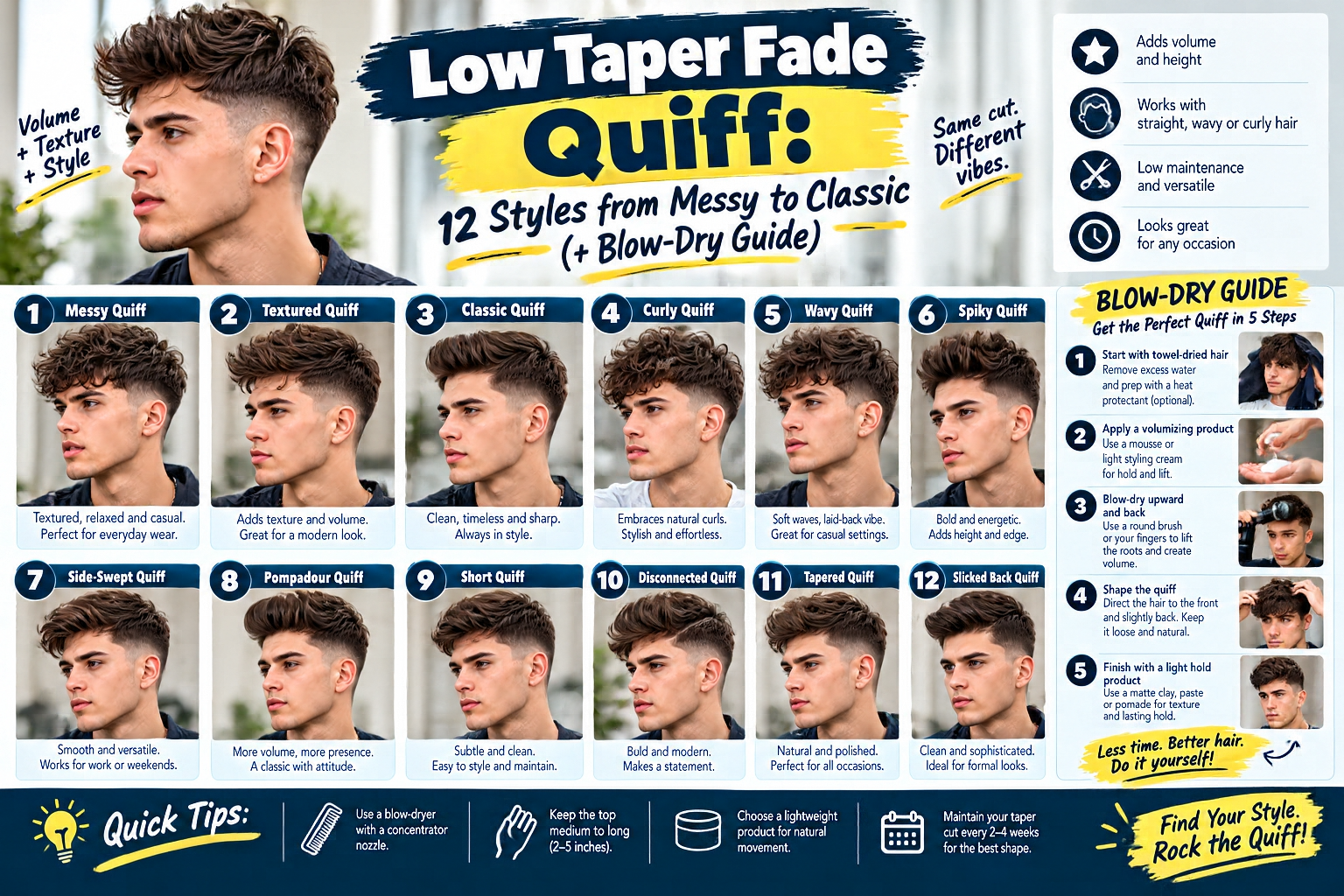
Lifted at the front before combing across, like a soft quiff. See quiff.
5. Deep Side Part
The part sits lower on the head, creating a dramatic sweep.
6. Short Side Part
2 inches on top; neat and easy for work. See for work.
7. Long Side Part
4 inches or more, swept across with movement.
8. Side Part Comb Over
Softer, with more volume and less defined parting. See comb over.
9. Wavy Side Part
Waves flow naturally away from the part. See wavy hair.
10. Curly Side Part
Loose curls separated with a soft part. See curly hair.
11. Side Part with a Beard
Polished and mature. See with beard.
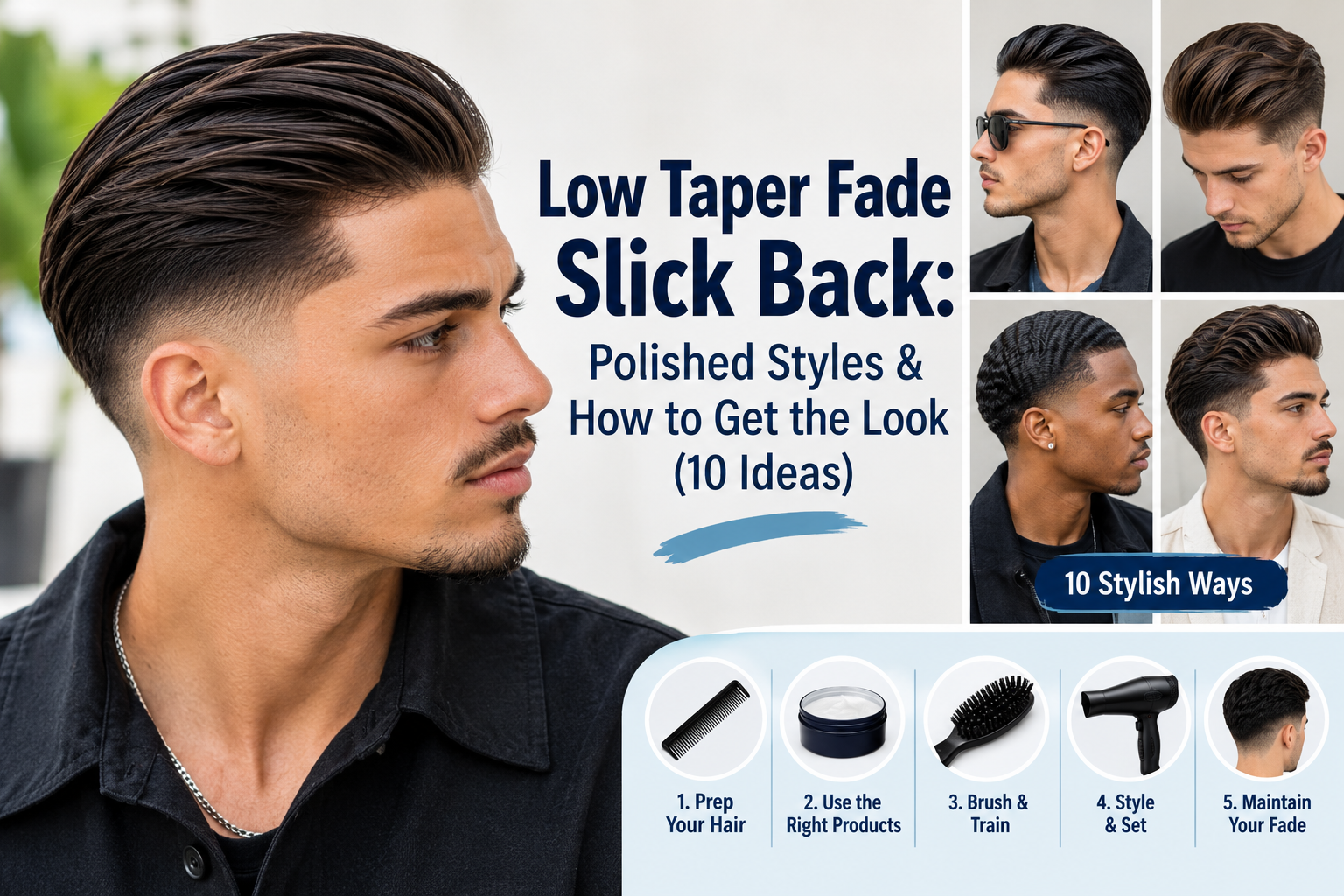
12. Slick Side Part
Combed and shiny for formal events. See slick back.
How to Ask Your Barber
"Low taper fade, half guard at the bottom, sides at a #3. On top, about 3 inches for a side part on the [left/right], following my natural part. [Optional: add a hard part.] Keep it slightly longer at the front."
How to Style a Side Part
- Towel-dry to damp.
- Comb the part with the edge of a comb along your natural line.
- Blow-dry: the smaller side down and back, the larger side up and across.
- Apply product: paste or cream for a natural look, pomade for shine.
- Comb into place, then lightly ruffle with fingers if you want a softer look.
See our products guide.
Hard Part: Pros and Cons
Pros: sharp, distinctive, stays defined even without styling. Cons: shows regrowth quickly; can emphasize thin hair; commits you to one part for several weeks.
If you have thin hair, skip the hard part.
Side Part Etiquette: Which Side and Why
There is no strict rule, but a few patterns help:
- Follow your natural part (see the method above). Fighting your growth pattern means the part will fall apart by midday.
- Your crown swirl can guide you. If your crown swirls clockwise, many people find a left part sits better; counter-clockwise often suits a right part. This is a tendency, not a rule, so test both.
- Face asymmetry. If one side of your face looks stronger in photos, parting so the hair sweeps toward the other side can balance it.
Side Part Lengths at a Glance
| Top length | Look | Styling |
|---|---|---|
| 2 inches | Short Ivy League, very neat | Paste, fingers |
| 3 inches | Classic gentleman's side part | Paste or pomade, comb |
| 4+ inches | Long, sweeping side part | Cream or pomade, blow-dry |
The Side Part for Different Hair Types
Straight hair holds a crisp part with almost no effort. Wavy hair creates a softer, more relaxed version; use a cream rather than a strong pomade. Fine hair works best with a short side part and no shaved line. Coarse or thick hair benefits from blow-drying the part into place so it does not spring up.
Side Part Mistakes
- Parting too high. A part near the top of the head looks like a center part gone wrong. Aim for the outer corner of your eyebrow.
- Flat sides of the top. Lift the larger side slightly at the roots for a natural shape.
- Too much shine. In a modern office, natural or low-shine finishes look current.
Frequently Asked Questions
Which side should I part my hair on?
Follow your natural part. If you have no strong preference, many barbers suggest the side where your hair naturally falls or where you have a cowlick.
Is a side part good for a round face?
Yes, especially with volume at the front, which adds height and an asymmetric line.
What's the difference between a side part and a comb over?
A side part has a defined line; a comb over is softer, with hair swept across and less emphasis on the part line.
How long does hair need to be for a side part?
At least 2 inches on top; 3 to 4 inches gives more styling options.